Color
A reflection by Cody Hilliard
When it came to color, I wanted the palette of The Luthier to feel intentional, restrained, and deeply filmic.
But intention in color is a strange thing. It cannot just mean “pretty.” It has to mean something. It has to carry feeling, memory, texture, and atmosphere before the audience even has language for it.
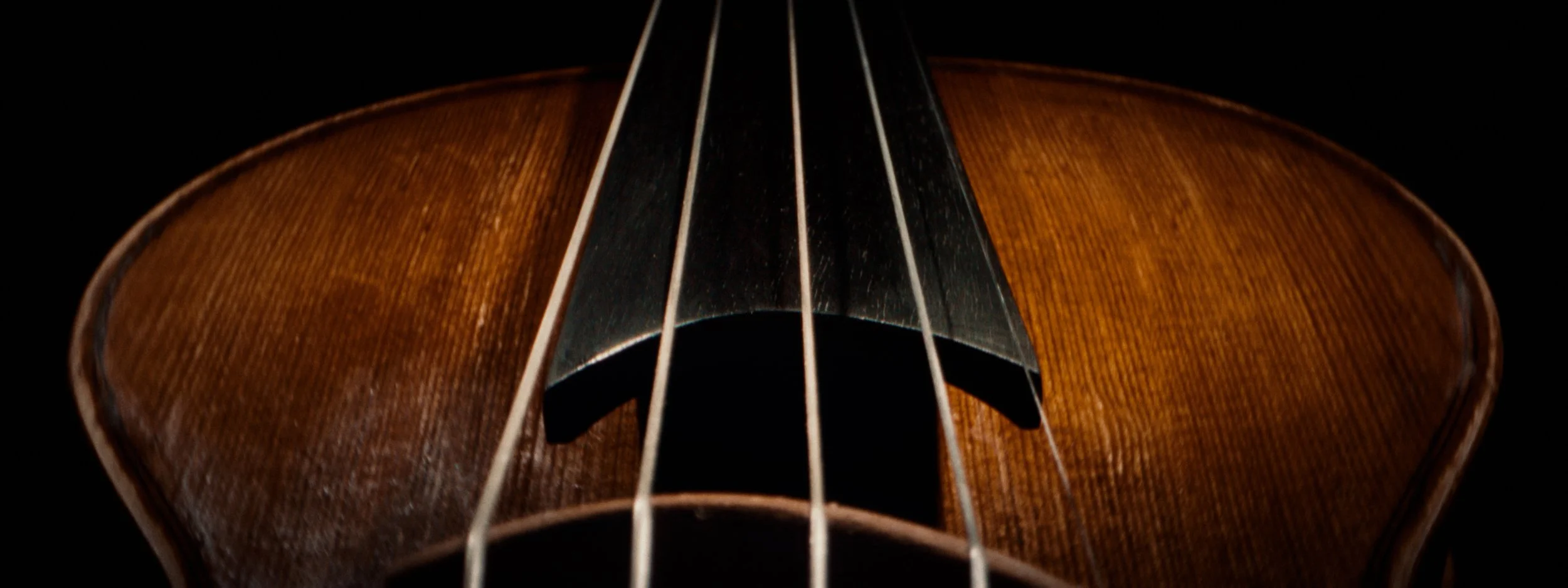
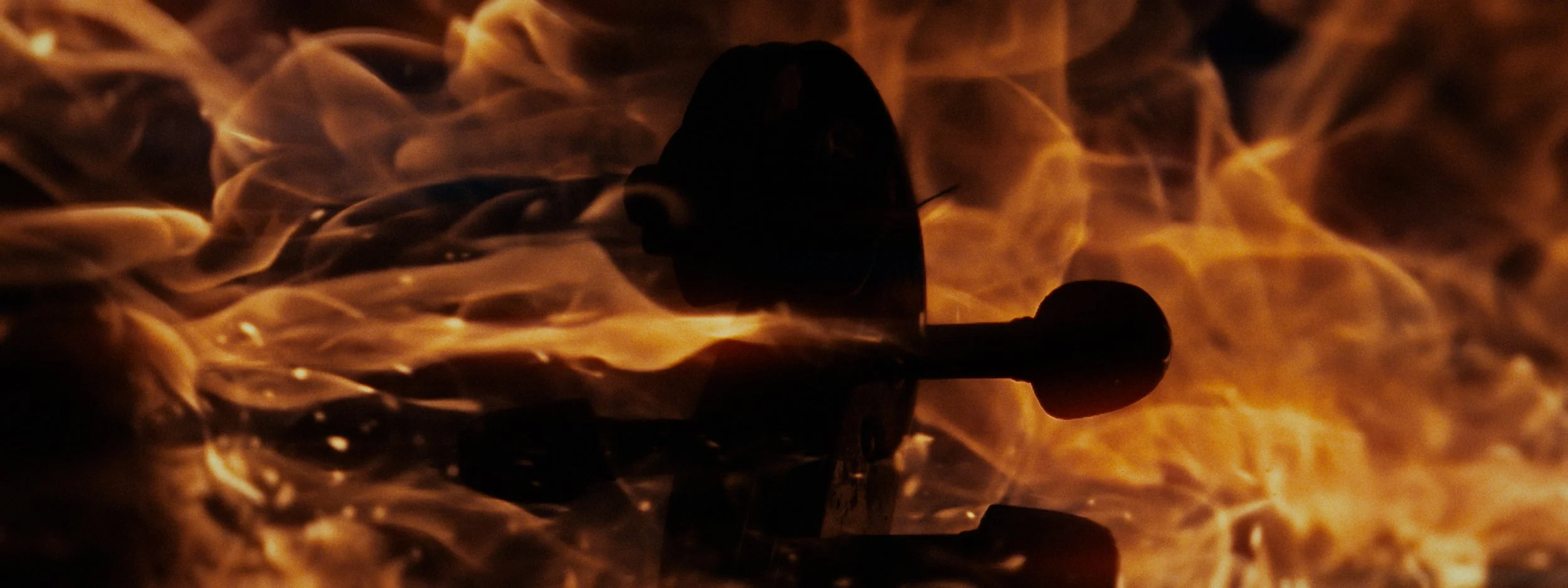
Throughout the piece, we pulled a great deal of inspiration from the materials of the work itself. There is this beautiful stain used on the violins that gives the wood an exquisite amber quality, almost edible in its richness. The grain takes on these deep oranges, reds, and browns that feel alive, as if the instrument is holding warmth inside of it. It was important to me that the film carried that same feeling. The image needed to feel as though it belonged to the violin.
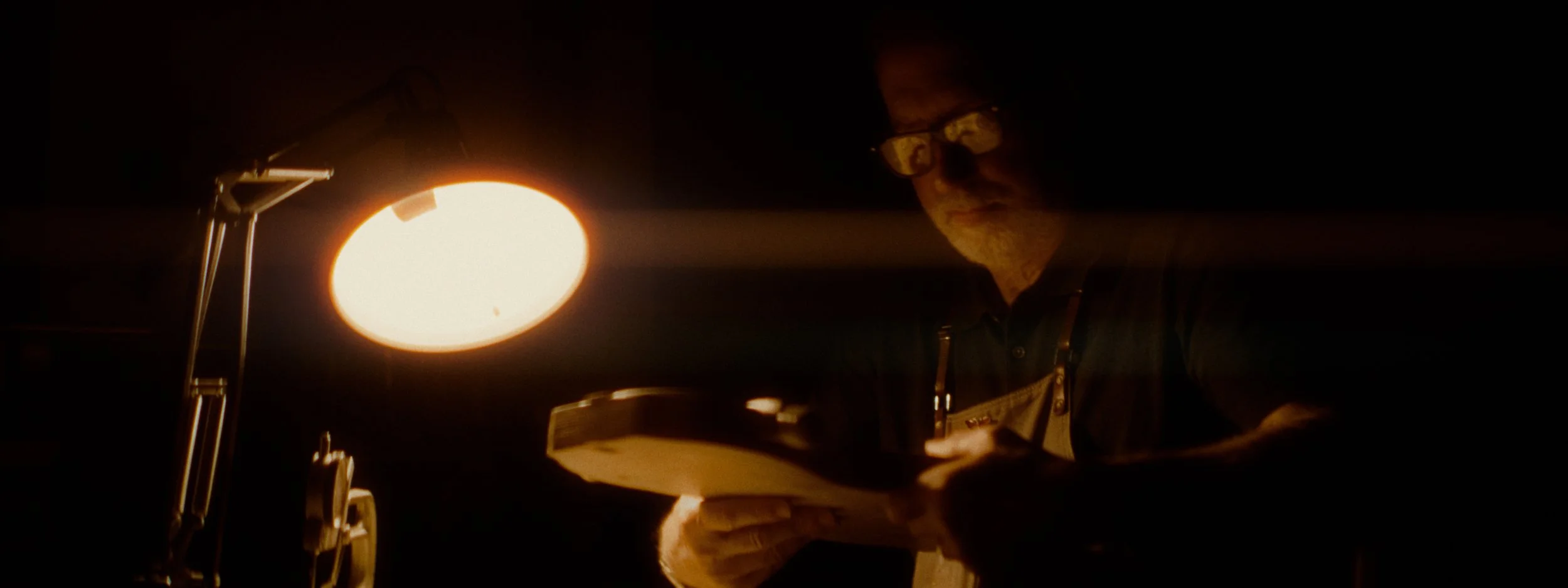
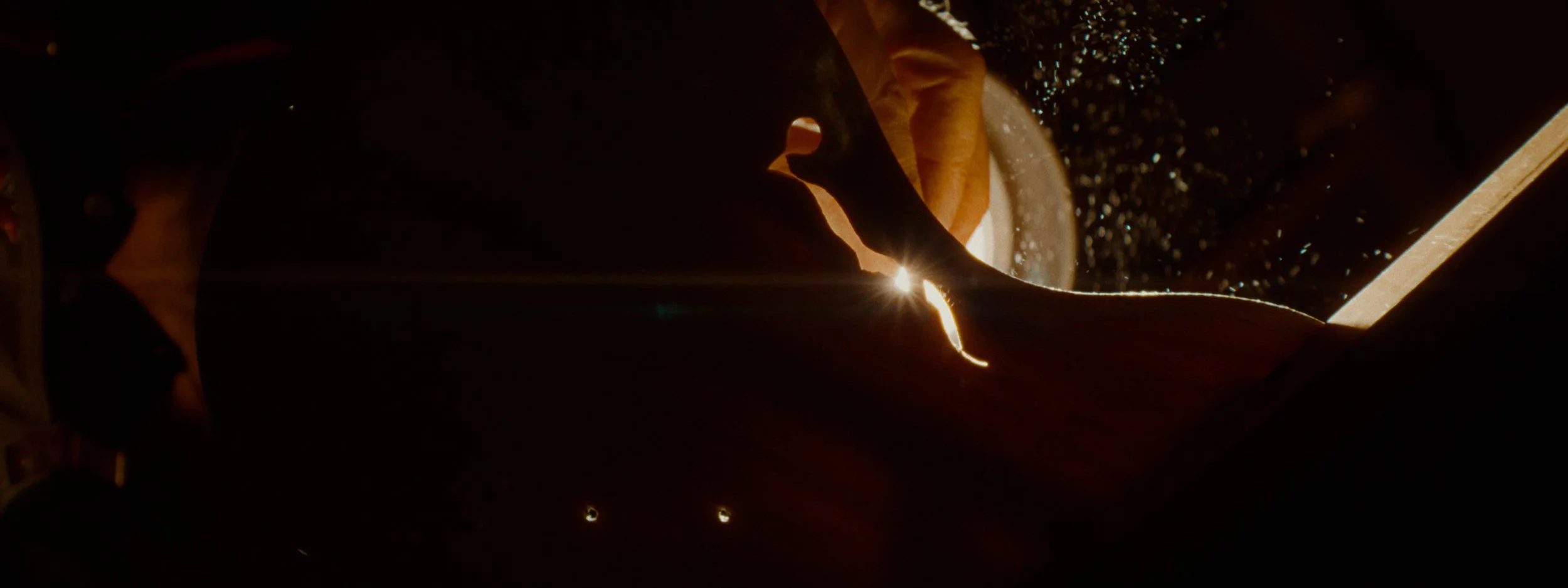
One sequence that really stands out to me is when he begins chiseling with a single lamp on in the room. I wanted that moment to feel like pure passion. The warmth and saturation of that scene embody, to me, what it means to become one with the instrument. The room, the wood, the hand, the tool, and the final violin all begin to speak the same visual language.
Then there is the blue.
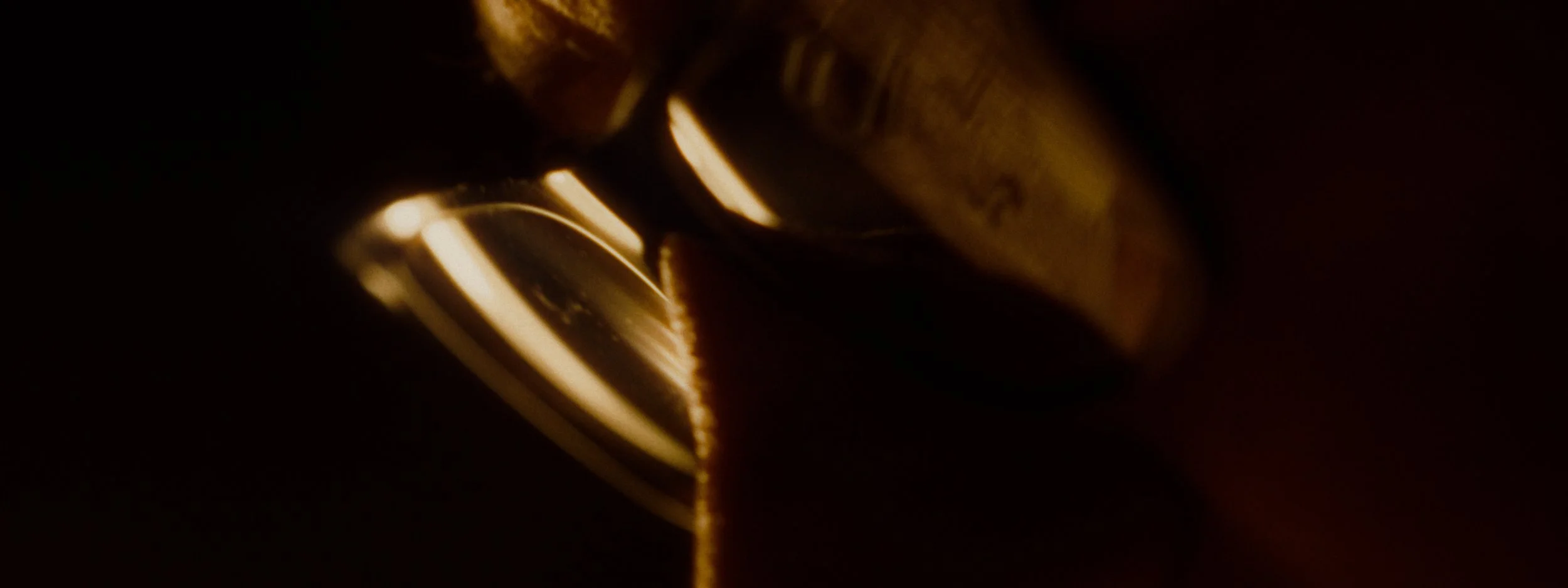
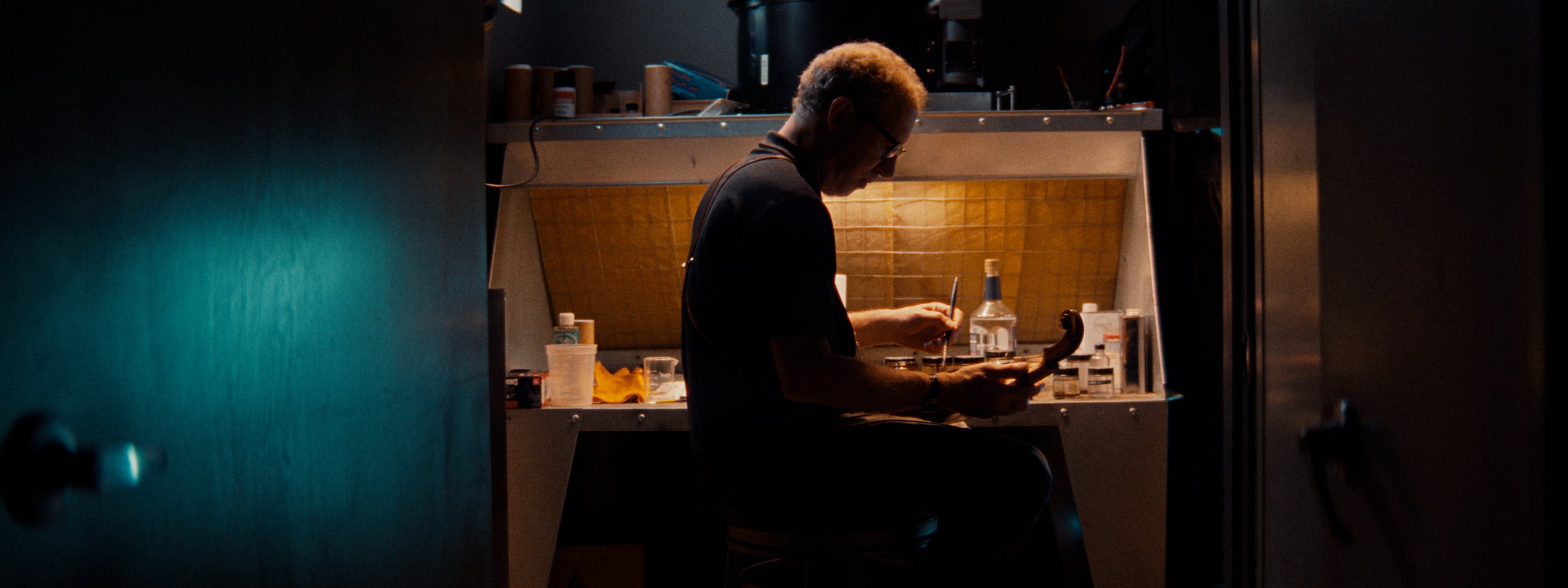
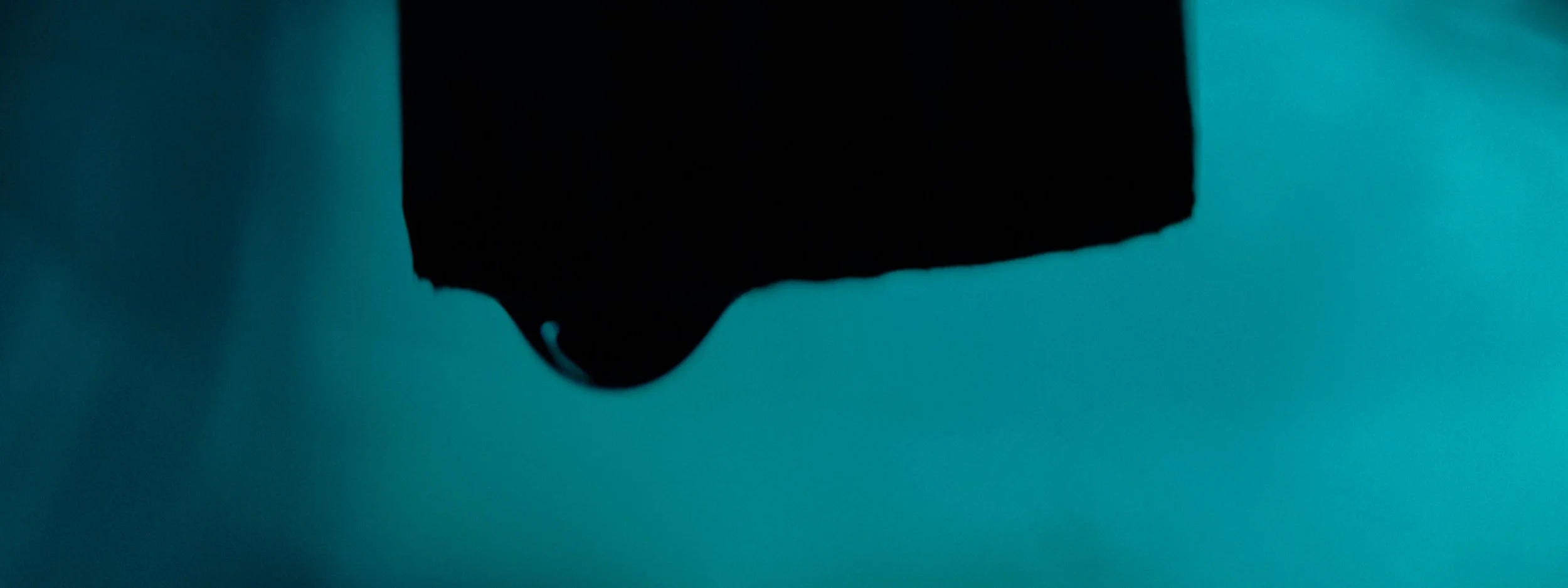
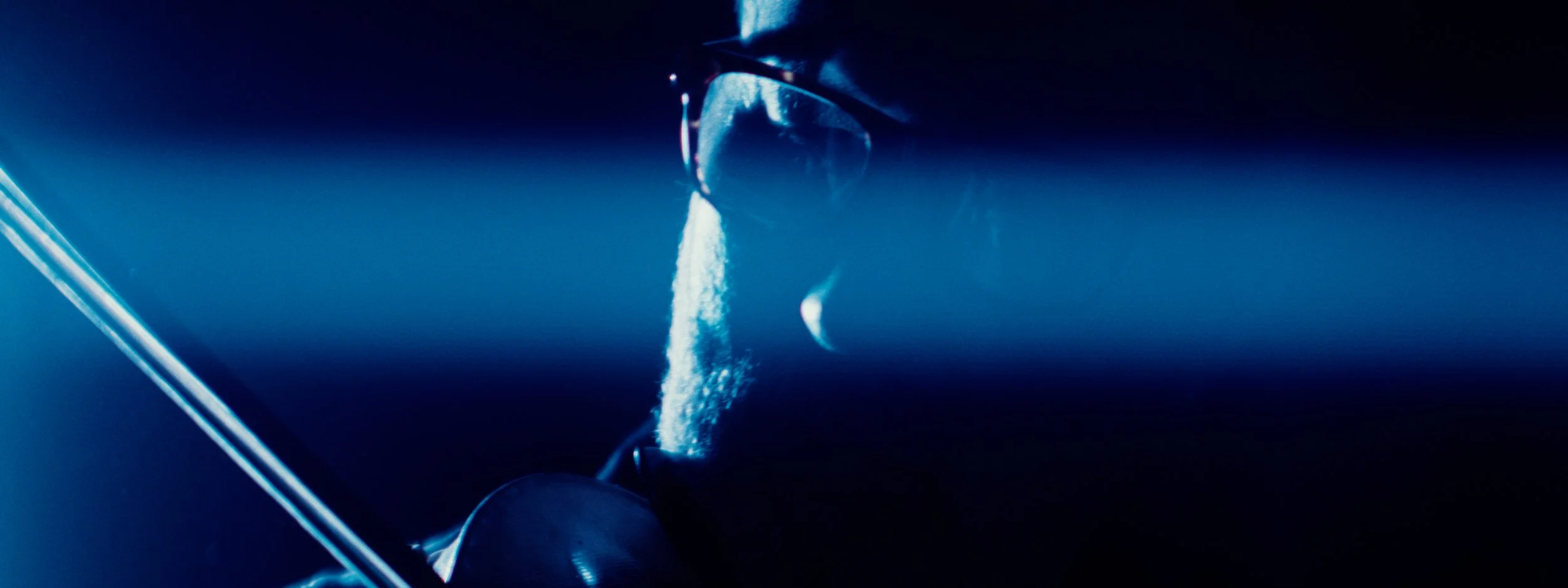
During the staining process, the violin is UV treated, and that ultraviolet light renders on camera as this crisp, almost cyan blue. It has a completely different emotional register from the amber warmth of the wood. It feels sharp, electric, and strangely intimate. I wanted to draw that color out in a few other parts of the film, especially in the brushwork, where we pushed the image toward that same blue until it took on a new kind of life. It is one of those colors that almost tickles the pupil. It does not just sit in the frame. It vibrates.
I was also thinking a lot about the relationship between color and music. We understand music emotionally almost instantly. A song can feel sad, joyful, angry, aching, or transcendent within seconds. Color has that same power. It can tell the audience how to feel before a word is spoken.
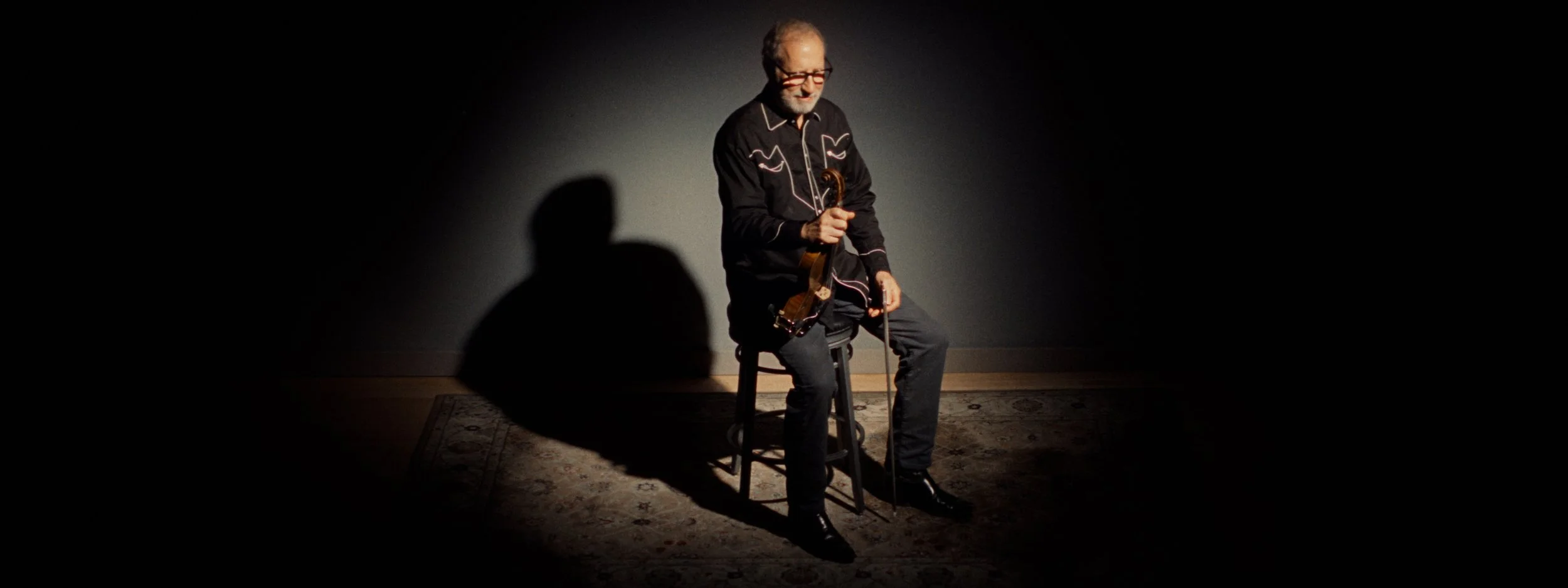
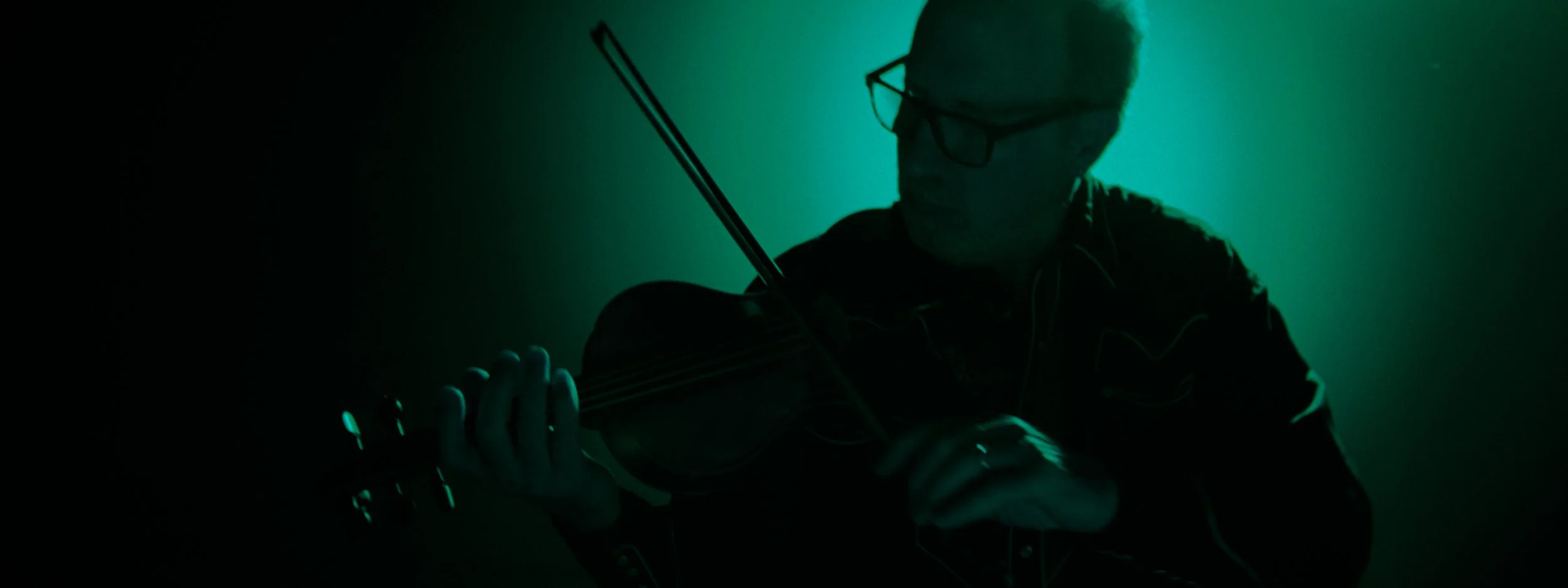
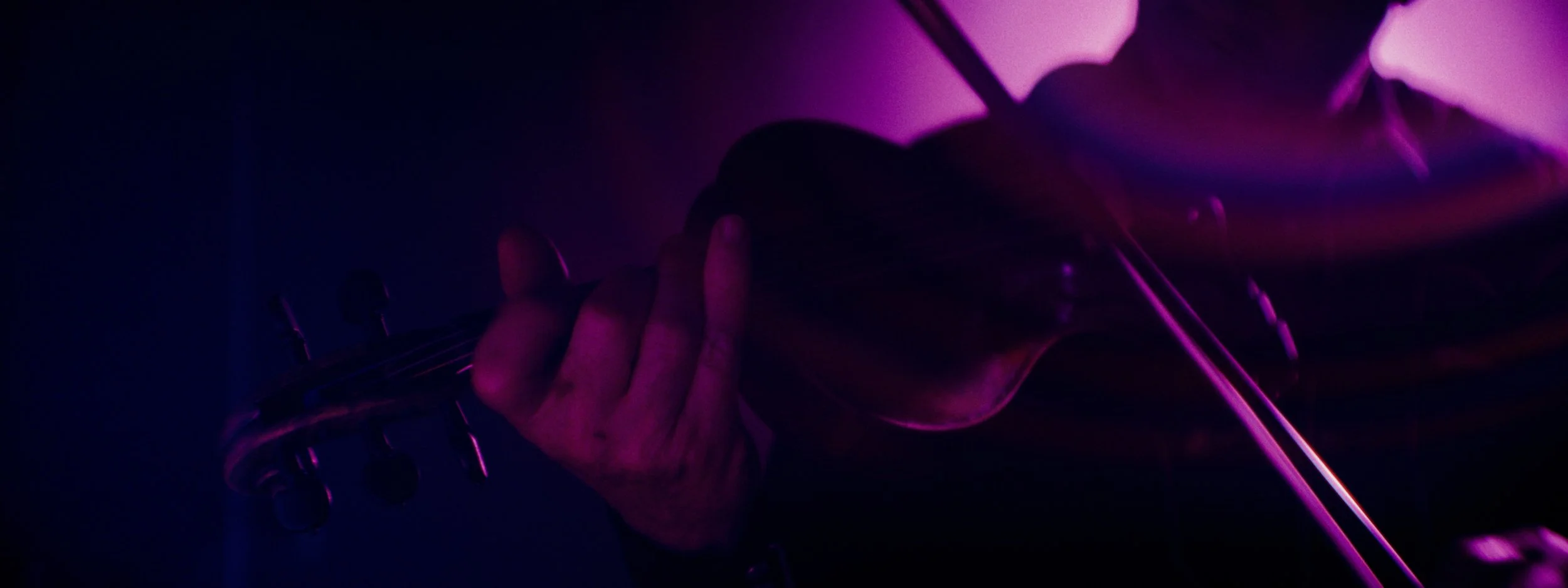
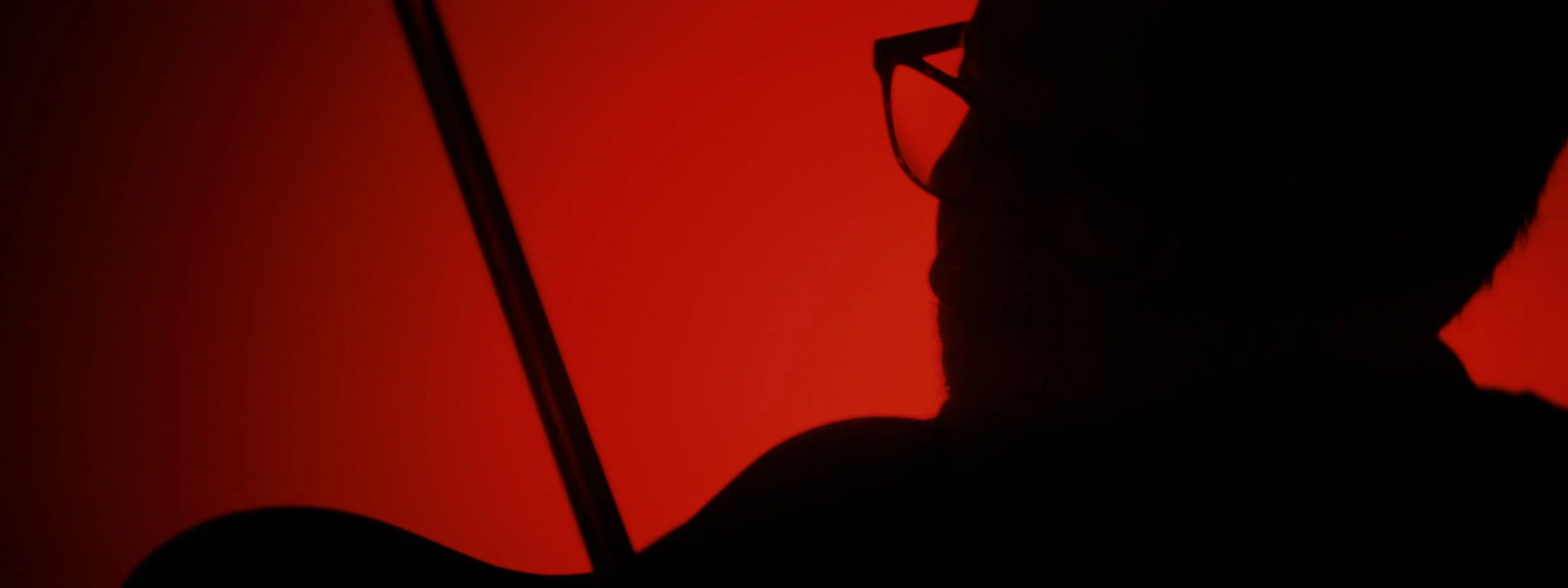
So when he finally plays the finished violin, and the film lifts into something more expressive, we allowed the color to open up with it. We chose specific tones to reflect the emotional diversity of the instrument itself: warmth, melancholy, fire, clarity, and release. That final sequence needed to feel like the violin was not simply being played, but was taking us somewhere else entirely.
All of those choices, the amber wood, the electric blue, the warmth of the lamp, the grain, the halation, the softness, and the restraint, were part of the same pursuit.
To use color not as decoration, but as feeling.
That, to me, is The Luthier.